

Buying your first piano is a significant step in your musical journey. Whether you’re a complete beginner or have some prior musical experience, the decision to invest in a piano requires careful consideration.
However, with numerous options available in the market, ranging from acoustic to digital pianos, making the right choice can be overwhelming.
This comprehensive guide aims to simplify the process, providing you with essential information to help you make an informed decision when buying your first piano.
Table of contents
1. Understanding the Different Types of Pianos
Before diving into the buying process, it’s important for us to understand the different types of pianos available:
Acoustic Pianos
Acoustic pianos are often considered the gold standard for pianists, offering an authentic sound that is difficult to replicate with digital instruments. However, they do require more space and maintenance compared to digital pianos.
The two most common types of acoustic pianos are grand and upright pianos:
Grand Pianos
Known for their impressive sound and aesthetics, grand pianos are often the choice of professional pianists.
Grand pianos come in various sizes, from baby grands to concert grands, each offering different sound qualities and playing experiences. A concert grand piano is 9 feet long, but grand pianos can range in length from 5-9 feet.
Grand pianos are not the most practical choice for most beginners, as they can be very expensive and they take up a lot of room. However, a top quality grand piano is an excellent investment if both money and space are no object.

Upright Pianos
Most people buying a piano for their home choose an upright piano, also known as a vertical piano.
Ideal for those with limited space, upright pianos provide a vertical design that saves floor space while still delivering a rich sound. They can vary in size, ranging from 36-51 inches in height, but all upright pianos require the same amount of floor space – approximately 5 feet by 2 feet.
The largest type of vertical piano is called a studio piano, which is 44 inches or taller. Vertical pianos that are 39-42 inches tall are known as consoles, and the smallest type of vertical pianos is the spinet piano, which ranges from 36-39 inches tall.

Digital Pianos
Digital pianos offer versatility and convenience, making them popular among beginners and experienced players alike. They come equipped with various features such as different instrument sounds, headphone jacks for silent practice, recording capabilities, and more.
Digital pianos are designed to replicate the sound and feel of traditional acoustic pianos, offering weighted keys that mimic the resistance and responsiveness of a piano’s keys.
Additionally, most digital pianos will have all the same 88-keys that a traditional piano would have, which means you are not limited in what pieces you are able to play.

Electronic Keyboards
While both digital pianos and electronic keyboards share similarities in their electronic nature, they serve different purposes and cater to distinct user preferences.
While electronic keyboards offer a less authentic piano playing experience, they are the most versatile and portable option, featuring a wide range of instrument sounds and built-in features such as auto-accompaniment and recording capabilities.
Electronic keyboards can sometimes have lighter, non-weighted keys and are geared towards beginners and casual players. One limit is that electronic keyboards is that they have fewer keys than a traditional 88-key piano would. Often you will find just 61 keys, but 37, 49, and 76 keys are also common.

2. Factors to Consider When Buying Your First Piano
Now that you’re familiar with the different types of pianos available, let’s explore the essential factors to consider before making your purchase:
Budget
First, you want to determine how much you’re willing to spend on your first piano. Keep in mind that acoustic pianos tend to be more expensive than digital ones, but they offer a more authentic piano playing experience and sound.
That being said, if you’re a beginner pianist, you don’t necessarily have to get on a top-of-the-line piano right away. It might be more sensible to start with an entry-level instrument for the first few years, and then upgrade to a higher quality piano later down the road.
However, do not to start with the cheapest piano you can find, as you risk having to repair or replace it sooner than if you had spent a little more on a higher quality instrument.

Space
Next, you want to consider the space required for your new piano. Assess the space available in your home or studio. Keep in mind that acoustic pianos (especially grand pianos) will require more space and proper acoustic considerations.
Don’t forget about the space required to actually transport your piano into your desired room. If your home has many stairs or narrow hallways, then having an acoustic piano may be out of the question.
If space is limited, consider opting for a digital piano, which offers a more portable and compact design.

Touch and Feel
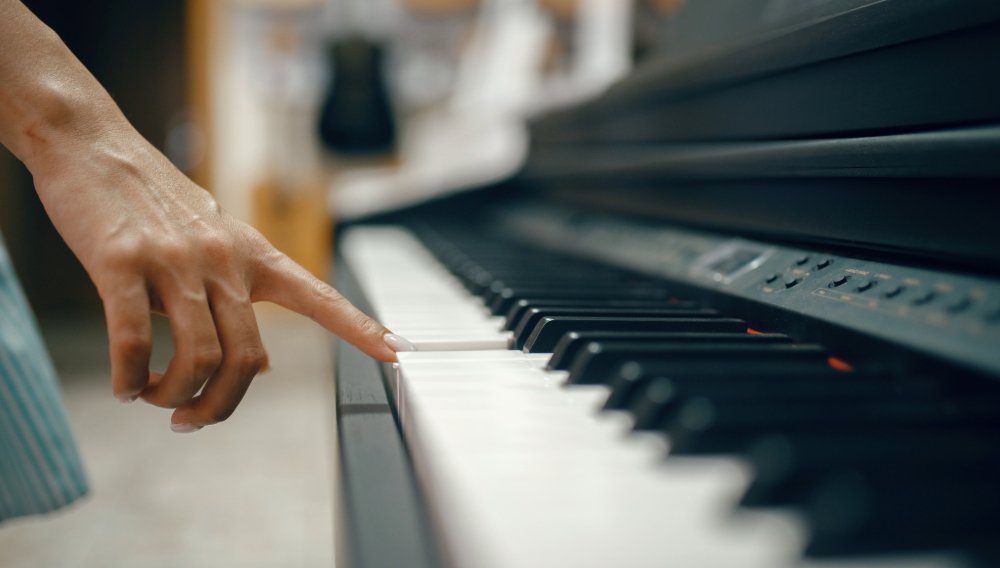
While not a concern for acoustic pianos, if you are shopping for a digital piano then one important feature is whether or not the piano has weighted keys.
Pianos with weighted keys are designed to mimic the feel of an acoustic piano, providing resistance and a sense of heaviness that responds to the player’s touch. Weighted keys are typically found on digital pianos and higher-end electronic keyboards.
Non-weighted keys are often seen on entry-level keyboards. While these keys are easier to press, they don’t offer the same level of control and expression as weighted keys, limiting advanced playing techniques and the transition to a real acoustic piano.
Sound Quality
Another important factor is the sound quality of the piano you wish to buy.
Acoustic pianos produce their sound through real vibrating strings, offering a rich and nuanced tone. In contrast, digital pianos replicate the sound and feel of acoustic pianos through advanced technology.
However, not all sampling for digital pianos is created equal, so try out a few pianos first before you make a purchasing decision. Listen to and compare the tone differences you hear between various models and brands.

Maintenance
Consider the maintenance needs of the piano you choose, as well as the costs and time required.
An acoustic piano needs regular maintenance to ensure it remains in optimal playing condition and retains its value over time. Regular tuning is essential (recommended at least twice a year) as pianos are sensitive to changes in temperature and humidity, which can affect their pitch and sound quality.
Digital pianos require far less maintenance, but may still need occasional servicing. Some models require software updates to ensure optimal performance and to access to the latest features. Also, some parts may need to be replaced after heavy use, such as the power adapter and sustain pedal.

Long-Term Goals
Lastly, think about your long-term musical goals and how they align with your choice of piano.
If you aspire to become a professional pianist or pursue advanced piano studies, investing in a high-quality acoustic piano may be worthwhile. For casual playing and hobbyists, a digital piano may suffice.
If you are interested in writing, recording, or producing music, then perhaps an electronic keyboard with a wide range of instrument voices and MIDI capabilities might be the best option for you.

3. Buying New vs. Used Pianos
One of the key decisions you’ll face when buying your first piano is whether to invest in a new instrument or consider purchasing a used one.
A new piano is not necessarily any better than a used piano, but there are several factors to consider. The piano brand and model, its reputation, date of manufacture and its overall condition, along with many other factors, go into determining the honest market value of a piano.
Both options have their advantages and considerations, so let’s explore the differences to help you make an informed decision.

Benefits of Buying New Pianos
1. Warranty and Reliability
One of the primary benefits of buying a new piano is the warranty coverage provided by the manufacturer or retailer. New pianos typically come with warranties that cover manufacturing defects and repairs for a certain period, providing you with peace of mind and assurance of reliability.
2. Latest Technology and Features
New digital pianos often incorporate the latest technology and features, such as advanced sound sampling, improved key action, and enhanced connectivity options. If you’re interested in the latest cutting-edge technology, then buying a new instrument might be the way to go.
3. Long-Term Investment
Buying a new piano can be viewed as a long-term investment, especially if you plan to keep the instrument for many years. New pianos typically require less maintenance and are less likely to develop issues compared to used ones, providing you with a reliable instrument for years to come.

Benefits of Buying Used Pianos
1. Cost Savings
One of the most significant advantages of buying a used piano is the potential cost savings compared to purchasing a new one. Used pianos are often available at lower prices, making them more accessible to budget-conscious buyers or those looking for a higher-quality instrument within a limited budget.
2. Vintage Charm and Character
Used pianos, especially those with some age and history, can possess a unique charm and character that may appeal to certain buyers. Vintage instruments often have distinct tonal qualities and aesthetic appeal that cannot be replicated by new pianos, adding a sense of nostalgia to your musical experience.
3. Potential for Bargaining
When buying a used piano, there’s often room for negotiation regarding the price, especially if the instrument requires minor repairs or maintenance. Sellers may be willing to lower the asking price or offer additional incentives to close the deal.

Choosing Between New and Used Pianos
1. Budget and Priorities
Consider your budget and priorities when deciding between a new and used piano. If budget is a primary concern, a used piano may offer better value for your money. However, if reliability and warranty coverage are essential to you, investing in a new piano may be the preferred option.
2. Inspection and Evaluation
Whether you’re buying new or used, it’s essential to thoroughly inspect and evaluate the piano before making a purchase. For used pianos, pay close attention to factors such as condition, age, tuning stability, and any signs of damage. It might be helpful to bring someone along who is knowledgeable about pianos to inspect the instrument before making a final decision.
3. Reputation of the Seller
When buying a used piano, research the reputation of the seller or dealership to ensure they have a track record of honesty and transparency. Ask about the piano’s history, maintenance records, and any previous repairs or refurbishments to make an informed decision.

Whether you choose to buy a new or used piano ultimately depends on your preferences, budget, and musical goals. Both options offer distinct advantages and considerations, so take the time to weigh your options carefully and choose the one that best fits your needs.
4. Steps to Buying Your First Piano
Choosing the Right Retailer
If you’ve decided to purchase a brand new piano, then the next step is to find a reputable piano retailer. Here are some tips for selecting the right one:
1. Research
Do your research and read reviews of piano retailers in your area. Look for stores with a good reputation for quality products and excellent customer service.
2. Visit Showrooms
Visit multiple piano showrooms to test out different models and brands. Take your time to play the pianos and assess their sound, touch, and overall feel.
3. Seek Expert Advice
Don’t hesitate to ask questions and seek advice from knowledgeable sales staff. They can help you narrow down your options based on your preferences and budget.
4. Consider Additional Services
Choose a retailer that offers additional services such as delivery, tuning, and warranty coverage. These services can enhance your buying experience and ensure that your piano remains in top condition.

Making the Purchase
After careful consideration and deliberation, you’ve finally found the perfect piano for your needs. Here are the final steps to complete your purchase:
1. Negotiate Price
Don’t be afraid to negotiate the price with the retailer, especially if you’re buying an acoustic piano. Many retailers are willing to offer discounts or throw in extras such as benches or tuning services to close the deal.
2. Arrange Delivery
Coordinate with the retailer to arrange delivery of your piano to your home or desired location. Make sure to schedule the delivery at a time when you’ll be available to receive and inspect the instrument.
3. Schedule a Tuning
Once your piano is delivered and set up, schedule a tuning session with a professional piano tuner. Regular tuning is essential for maintaining the instrument’s sound quality and playability.
4. Enjoy Your New Piano
Finally, take some time to enjoy your new piano and embark on your musical journey. Whether you’re learning to play your favourite songs or composing your own music, your piano will be your faithful companion for years to come!

Bringing Your New Piano Home
While transporting a electric keyboard or digital piano can usually be done without much help, bringing an acoustic piano home will take some effort. Not only is a piano incredibly heavy, it is easily scratched or damaged, and its intricate insides can be damaged during a move.
If you have just purchased an acoustic piano, then the best thing for you to do is hire a professional piano mover.
Pianos also need to be tuned after moving, even if they are only transported a short distance. Some technicians recommend that a piano should sit in its new location for several weeks before tuning it to allow it to adjust to the new environment.

6. Piano Shopping Guide
Popular Brands
If you’re not familiar with any piano manufacturers, here is a list of popular brands for acoustic pianos, digital pianos, and electronic keyboards:
- Steinway & Sons – Renowned for their high-quality grand and upright pianos, often considered the gold standard in acoustic pianos.
- Yamaha – Offers a wide range of pianos from entry-level to professional, known for their reliability and quality.
- Kawai – Known for their innovation and quality, offering both uprights and grands with a focus on touch and tone.
- Roland – Provides high-quality digital pianos and keyboards with advanced features, suitable for both amateur and professional musicians.
- Casio – Offers affordable and innovative digital pianos and keyboards, known for their portability and diverse features. Ideal for beginners and hobbyists.
- Korg – Renowned for their innovative keyboards with diverse sounds and robust build quality, favoured by many professional musicians.
These brands are well-regarded in the music industry for their quality, reliability, and innovation, making them popular choices for pianists and keyboard players at all levels.
Price Ranges
Pianos can vary significantly in price depending on their type, brand, condition, and size. Here’s some general price ranges to give you an idea:
Acoustic Piano Prices
Grand Pianos:
- Baby Grands: These smaller grands start around $8,000 and can go up to $20,000.
- Mid-Size Grands: Mid-size grand pianos typically range from $20,000 to $40,000.
- Concert Grands: The largest and most prestigious pianos, concert grands can range from $40,000 to over $150,000.
Upright Pianos:
- Entry-Level Uprights: These typically range from $3,000 to $5,000.
- Mid-Range Uprights: These pianos usually cost between $5,000 and $10,000.
- High-End Uprights: Prices for these can exceed $10,000, with premium models from brands like Steinway & Sons, Bösendorfer, and other luxury manufacturers.
Digital Piano Prices
Digital Pianos:
- Entry-Level Digital Pianos: These typically range from $300 to $700. They are suitable for beginners and often include non-weighted or semi-weighted keys.
- Mid-Range Digital Pianos: Mid-range digital pianos generally fall between $700 and $1,500. These models offer better sound quality and fully weighted keys.
- High-End Digital Pianos: High-end digital pianos can cost between $1,500 and $5,000 or more. They are ideal for serious pianists and professional use.
Electronic Keyboards:
- Entry-Level Keyboards: Entry-level keyboards are usually priced between $100 and $300. They are made for beginners and usually feature lighter, non-weighted keys.
- Mid-Range Keyboards: Mid-range keyboards typically range from $300 to $800. They offer more advanced features, an often include semi-weighted keys.
- High-End Keyboards: High-end electronic keyboards can cost from $800 to $3,000 or more. They include fully weighted keys, professional-quality sounds and robust build quality.
7. Best Pianos for Beginners (Our Top 5 Recommendations)
If you need some help narrowing down your selection, we’ve included our top piano recommendations for beginners down below. We’ve limited this list to just digital pianos, as few beginners have the budget or the space to accommodate an acoustic piano in their home.
1. Roland FP-10 Digital Piano
Best overall
CAD $849.99
- Key Features: 88 weighted keys, PHA-4 Standard action, SuperNATURAL Piano sound engine, Bluetooth connectivity, onboard practice features.
- Pros: Excellent key action, rich sound, compact design, Bluetooth MIDI support.
- Cons: Basic interface with fewer voices and features.

2. Yamaha P145B Digital Piano
Best compact portable design
CAD $799.99
- Key Features: 88-key weighted keys, 2 x 7-watt speakers, 64-note polyphony, headphone output, 2x pedal inputs
- Pros: Compact, minimalistic design, easy to transport
- Cons: Bare-bones, few instrument voices, small internal speakers

3. Alesis Recital Digital Piano
Best budget-friendly option for starting pianists
CAD $299.00
- Key Features: 88 semi-weighted keys, 12 premium voices, built-in speakers, USB-MIDI connectivity.
- Pros: Affordable, versatile, comprehensive features for beginners, solid build.
- Cons: Sound quality is good but not as refined as some higher-end models.

4. Korg B2 Digital Piano
Best sound engine and features
CAD $699.99
- Key Features: Advanced piano sound engine with 12 carefully selected sounds, Natural Weighted Hammer Action (NH), USB MIDI connectivity.
- Pros: Easy to use, wide tonal range.
- Cons: Some users might find the key action slightly lighter than traditional pianos.

5. Yamaha YDP145 Arius Digital Console Piano
Best option for the serious pianist with limited space
CAD $1,799.00
- Key Features: 88 weighted keys, meticulously sampled from Yamaha’s flagship CFX grand piano, built-in speakers, New Virtual Resonance Modeling Lite (VRM Lite)
- Pros: Excellent key action, rich sound, lasting investment.
- Cons: Might be too expensive for some beginners.

Key Notes
- Weighted keys are ideal but not mandatory at the beginning stages of learning. However, the more advanced a player gets, the more necessary it becomes.
- A full-length (88 keys) keyboard is important in order to get a sense of the scope of the instrument. Smaller keyboards (76-key, 61-key, or fewer) are space-savers, but are not conducive to learning.
- No matter what, it’s important to get a feel for your keyboard in person and see what models you like. If possible, visit a local music store and try different models out before making a final decision.
Conclusion
Buying your first piano is a significant milestone that marks the beginning of your musical adventure.
By considering factors such as budget, space, sound quality, and long-term goals, you can make an informed decision that aligns with your needs and preferences. Just remember to take your time to test out different models before making your purchase.
With the right instrument by your side, you’ll be well-equipped to explore the beautiful world of piano music and unlock your musical potential.
I want to thank our piano teacher Arielle Ballance for the above piano recommendations listed in this article. This topic took a great deal of research and I was happy to be able to lean on her expertise as a professional pianist. You can read about Arielle on her teacher profile here.


Hello! I wanted to drop by and say that I really enjoyed this blog post. Your writing is always so clear and concise, and you have a talent for making.