

Whether you’re just picking up an instrument for the first time or looking to deepen your musical knowledge, one of the most essential concepts to learn is the chord. Chords are the building blocks of harmony and form the backbone of countless songs in every genre.
In this post, we’ll walk through what chords are, how they’re built, the different types of chords, and how they can be played on instruments like the piano and guitar. We’ll keep it simple and beginner-friendly, so let’s dive in!
Table of contents
1. What is a Chord?
In the simplest terms, a chord is a group of notes played together. Think of it as multiple sounds combined to create something richer than a single note on its own. If a melody is like the “story” of a song, the chords are the “background colours” that add emotion, texture, and depth.
To officially qualify as a chord, you need at least three notes played simultaneously, though some chords (like power chords on a guitar) only use two. The more complex the music, the more layers and variations of chords you’ll encounter. But don’t worry! Starting with the basics will give you a solid foundation to explore even the most advanced musical pieces.

2. How Are Chords Built?
Chords are built using a system based on scales. A scale is simply a sequence of notes arranged in ascending or descending order. The most familiar scale is the major scale — think of the notes you’d play when singing “Do-Re-Mi-Fa-Sol-La-Ti-Do.”
To create chords, musicians use individual notes from a scale, often starting on different degrees (or steps) of the scale. Let’s look at how this works.
Building a Triad (Three-Note Chord)
A triad is the most basic type of chord, made up of three notes. To build a triad, follow these steps:
- Step 1: Pick the root note (this will be the note the chord is named after).
- Step 2: Add the note that is a third above the root.
- Step 3: Add the note that is a fifth above the root.
Let’s see this in action with the C Major Scale:
- C Major Scale: C – D – E – F – G – A – B
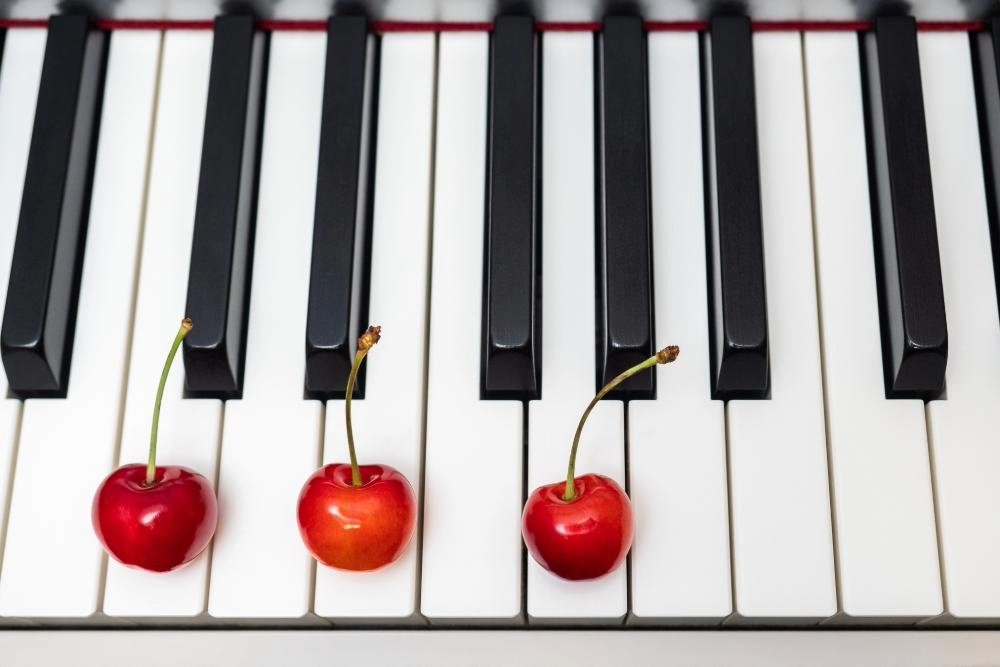
If you start on C (the root), you’d skip to E (the third) and then add G (the fifth). So, the notes for a C major chord are C, E, and G.
3. Different Types of Chords and Their Sounds
Once you understand how to build basic triads, you’ll start seeing how different combinations of notes create distinct emotional effects. Some chords sound happy, while others sound tense or sad. Let’s explore some common types of chords and how they feel.
1. Major Chords
- Structure: Root + Major Third + Perfect Fifth
- Example: C, E, G
- Sound: Bright, happy, and uplifting. Think of a song that makes you feel joyful—chances are it uses major chords.
2. Minor Chords
- Structure: Root + Minor Third + Perfect Fifth
- Example: C, Eb, G
- Sound: Sad or serious. Minor chords have a darker tone and are used to convey more emotional or introspective moods.
3. Diminished Chords
- Structure: Root + Minor Third + Diminished Fifth
- Example: C, Eb, Gb
- Sound: Tense and unstable. Diminished chords often create a feeling of suspense or unease.
4. Augmented Chords
- Structure: Root + Major Third + Augmented Fifth
- Example: C, E, G#
- Sound: Unsettling and mysterious. These chords are not as common but can add a sense of surprise.
5. Seventh Chords
- Structure: Root + Third + Fifth + Seventh
- Example: C, E, G, Bb
- Sound: Adding a seventh scale degree to chords make them sound jazzier and richer. Seventh chords are often used in jazz and blues music to create more colour in the harmony.

4. How to Play Chords on Piano
The piano is one of the best instruments for learning chords because it’s easy to see how notes stack together visually. Below is a step-by-step guide to playing chords.
Let’s say you want to play a C major chord:
- Find the Root Note: Start by pressing the C key on the keyboard.
- Add the Third: From C, skip D and play E.
- Add the Fifth: Finally, skip F and play G.
You can press these three notes (C, E, and G) at the same time to play a C major chord. On the piano, you can experiment by moving the chord shape up or down the keyboard to explore how other chords sound.
Chord Inversions
A cool trick on the piano is to play chords in different inversions. An inversion is when you rearrange the order of the notes. For example:
- Root Position: C – E – G
- 1st Inversion: E – G – C
- 2nd Inversion: G – C – E
Inversions make it easier to transition between chords and can add variety to your playing.

5. How to Play Chords on Guitar
Playing chords on the guitar involves pressing down on multiple strings at the same time to produce different notes. Unlike with the piano, chords on the guitar rarely use just a 3-note triad. Because guitars have 6 strings, chord fingerings on the guitar often use repeated notes in different octaves to get a fuller sound. Here’s how you can get started:
Basic Open Chords
Open chords are usually the first chords most guitar players learn. They use open strings (strings you don’t press down) combined with fretted notes. A few examples include:
- C Major: Place your fingers on the 1st fret of the B string, 2nd fret of the D string, and 3rd fret of the A string.
- G Major: Place your fingers on the 3rd fret of the low E and high E strings, and the 2nd fret of the A string.
Power Chords
A power chord is a simpler, two-note chord that’s often used in rock music. It’s usually made up of the root note and the fifth. For example, to play a G5 power chord:
- Press the 3rd fret on the low E string (G).
- Press the 5th fret on the A string (D).
- Strum just these 2 strings while avoiding the other 4 strings.
Power chords are versatile because they’re easy to move up and down the neck.

6. How Chords are Used in Music
Chords create the harmonic foundation for songs, and changing between chords in a progression is what makes music feel dynamic. Let’s take a look at a few ways musicians use chords in their compositions.
1. Chord Progressions
A chord progression is a sequence of chords played in a specific order. One of the most common progressions is the I-IV-V progression, which uses the 1st, 4th, and 5th chords of a major scale. For example, in the key of C:
- I = C Major
- IV = F Major
- V = G Major
Many popular songs use this type of progression because it creates a sense of movement and resolution.
2. Cadences
A cadence is like punctuation in music—it marks the end of a musical phrase or section, giving it a sense of resolution or pause. Some types of cadences you might encounter include:
- Perfect cadence: Moves from the V chord to the I chord, creating a strong sense of closure and giving a feeling of completion (similar to a period at the end of a sentence).
- Imperfect Cadence: Ends on the V chord, creating a feeling of suspense or incompleteness (like a musical comma). This cadence makes the listener feel like the music must continue to reach a full resolution.
- Plagal Cadence: Moves from the IV chord to the I chord (for example, F to C in the key of C). This cadence is often used at the end of hymns and is sometimes called the “Amen cadence” because of its association with that word.
3. Chords in Different Genres
Different genres of music tend to favor certain types of chords and progressions:
- Pop and Rock: Simple major and minor chords, with occasional power chords.
- Blues: Dominant seventh chords to create a bluesy feel.
- Jazz: Complex chords like major 7ths, minor 9ths, and diminished chords for a richer harmony.

7. Final Thoughts
Learning chords is an essential step for anyone who wants to play an instrument, write music, or just understand songs on a deeper level. Once you’re familiar with how chords are built and the emotions they create, you’ll start noticing patterns in the music you listen to.
Whether you’re playing on the piano, guitar, or any other instrument, mastering chords will unlock countless musical possibilities. So pick up your instrument, experiment with some chords, and have fun exploring how they can bring your music to life!


